
Estimating a decoration budget requires distinguishing between furniture, coverings, and intellectual services. Each category follows different cost logics, and confusing them inevitably leads to overruns. Here, we detail the technical trade-offs that structure a realistic budget.
VAT on decoration and VAT on renovation: the tax gap that skews estimates
The majority of interior transformation projects combine decoration and renovation work. The trap lies in the tax treatment. Furniture, lighting, and decorative objects are taxed at 20%, without exception. A sofa, a custom light fixture, a rug: normal rate.
Interior renovation work (installation of partitions, refurbishment of wall coverings, installation of a fitted kitchen) carried out in a property over two years old may benefit from a reduced VAT rate of 10% under certain conditions. This ten-point gap substantially alters the allocation of the budget.
We observe that many individuals establish their overall budget without integrating this difference. In a project combining furniture and work, the portion subject to the normal rate can represent half of the total bill. Anticipating this distribution allows for a correct assessment of the decoration budget with decoserotonine.fr before committing to artisans.
Work considered “pure” decoration (decorative painting, wallpaper installation, installation of moldings) is explicitly excluded from the 5.5% VAT schemes reserved for energy renovation. Confusing the two schemes exposes one to adjustments or, more frequently, an unpleasant surprise on the final quote.
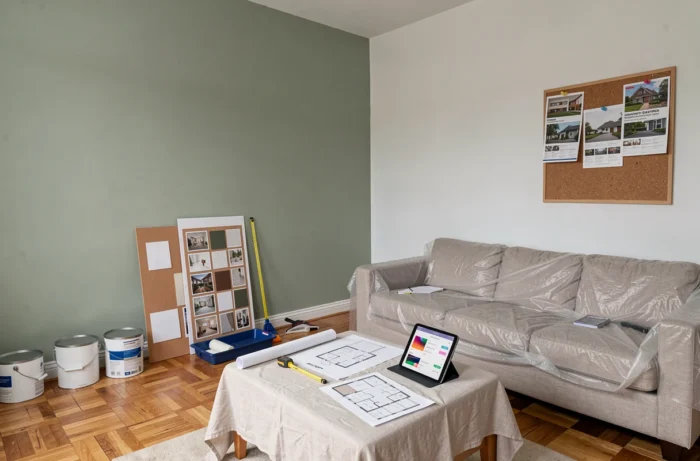
Breakdown of the decoration budget by category: furniture, coverings, services
Consumer articles suggest percentages relative to the value of the property. This approach poses a methodological problem: the value of a home depends on the local market, not on the condition of the interior surfaces. We recommend reasoning by expense category, room by room.
Hierarchy of categories according to their financial weight
- Floor and wall coverings: this is the most variable category. Solid wood flooring costs several times the price of laminate, and professional installation can double the material-only bill. Prioritize living areas over passage spaces.
- Structural furniture (sofa, bed, dining table): these pieces concentrate the majority of the furniture budget. Investing in the supporting structure and upholstery determines the actual lifespan of the furniture.
- Lighting and textiles: often underestimated, they represent the decorative lever with the best visual impact/cost ratio. A well-thought-out lighting plan transforms a space without altering the structure.
- Consulting services (interior designer, decorator): fees vary according to the billing method, whether fixed, a percentage of the work amount, or hourly. This category should be integrated from the start, not added during the project.
Kitchen and bathroom: separate budgets
These two rooms concentrate the highest technical costs. Plumbing, built-in electricity, and waterproof coverings fall under renovation, not decoration. We find that budget overruns almost always stem from technical work uncovered during the project in these two rooms.
Isolating their budget from the rest of the project helps avoid the domino effect: an unforeseen issue in the bathroom should not cut into the furniture budget for the living room.
Interior decoration quotes: reading between the lines of a cost estimate
A quote from a decorator or interior designer includes items whose granularity varies greatly from one professional to another. Three points deserve careful reading.
The “supplies” item may include or exclude sourcing. Some professionals charge a commission on furniture and materials purchases, while others incorporate this margin into their fees. Always ask if the quote includes the margin on purchases.
The mention “estimated work” does not bind the decorator. Only the quote from the executing artisan is valid. A decoration budget based solely on the decorator’s estimate carries a margin of uncertainty that must be covered by a contingency reserve.
The scope of the mission changes the price. A mood board with a shopping list does not cost the same as a complete project follow-up with work acceptance. Comparing two quotes without verifying that the scope of services is identical makes no sense.

Concrete trade-offs for a home decoration project
Transforming an interior with a controlled budget relies on deliberate trade-offs, not on soft compromises applied everywhere.
Concentrate the budget on high-usage areas. The living room and kitchen absorb the majority of time spent in a home. Investing in the quality of materials and furniture in these spaces yields a return in comfort far superior to a uniform distribution.
The phasing of the project is an underutilized lever. There is no obligation to complete everything at once. First addressing coverings (floor, walls), then structural furniture, and finally decorative accessories allows for spreading out expenses without degrading the coherence of the project, provided a comprehensive plan is in place from the start.
Finally, the “contingencies” item is not optional. Any estimate without a margin for unforeseen events is a false estimate. Surprises during construction (condition of the substrate under an old covering, electrical compliance, moisture issues) appear in the vast majority of projects involving work.
A realistic decoration budget is therefore built in three stages: allocation by category and room, verification of the applicable VAT regime for each line, and then adding a reserve. This framework does not guarantee the absence of surprises, but it significantly reduces the gap between the expected amount and the final bill.