
The notification of a Spanish fine often arrives several weeks after returning to France, in the form of a letter from the DGT or a notice sent by the ANTAI. The reaction time is short, the interfaces are in Spanish, and the consequences of non-payment go beyond a simple postal reminder. Here is the procedure to effectively handle a speeding fine received from France.
Cross-border notification: what the DGT transmits to French authorities
The cooperation between France and Spain regarding traffic violations is based on the European directive on cross-border exchange of information. Prosecutions can be initiated for speeding, running a red light, driving under the influence, using a phone while driving, or driving in a prohibited lane.
The DGT (Dirección General de Tráfico) queries the French registration file via the EUCARIS system. The fine notice is sent to the holder of the registration certificate, not necessarily to the actual driver. This point is crucial: if you were not driving, you must designate the driver within the allotted time; otherwise, the financial responsibility falls on you.
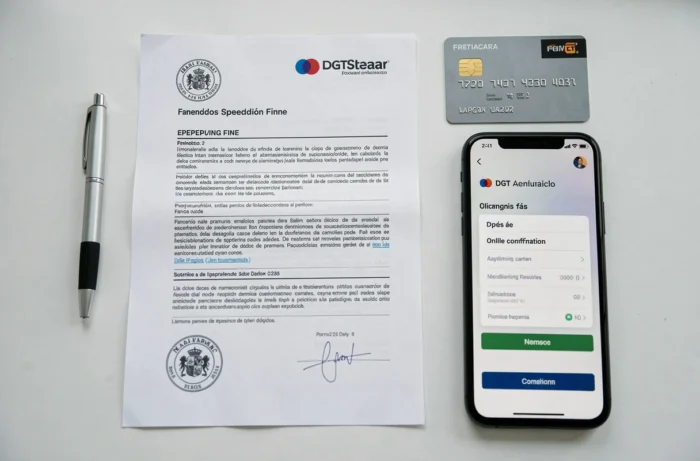
The letter received in France mentions the case number (expediente), the date of the offense, and the total amount. These three elements are necessary for any payment or contestation process. We recommend keeping them even after payment, as a duplicate notification is not uncommon during the transmission between administrations.
Online payment on the DGT website with a French card
The DGT portal allows you to pay a fine without a Spanish digital certificate or electronic ID. You just need to enter the case number, the date of the offense, and the total amount listed on the notice. The interface is available in French on some pages, but most of the process remains in Spanish.
Visa and Mastercard cards issued by French banks are accepted. No Spanish bank account is required. However, the issuing bank may charge fees for international transactions or currency conversion, even if the amount is debited in euros. Check your card’s terms before confirming the payment.
To learn in detail how to pay a fine in Spain via the DGT platform, the technical process should be followed step by step, especially to avoid input errors on the case number.
Payment verification and receipt
Once the payment is validated, the DGT generates a downloadable receipt. Keep this document in PDF format for at least two years. In case of subsequent follow-up by a collection agency, this receipt is the only enforceable proof. The DGT does not send confirmation by postal mail to France.
50% discount for pronto pago: deadlines and conditions for a foreign driver
The pronto pago mechanism grants a 50% discount on the fine amount if payment is made within 20 calendar days following the notification. This period starts from the actual date of receipt of the notice, not from the date of the offense.
This provision applies to foreign drivers under the same conditions as for Spanish residents. The DGT automatically calculates the reduced amount during online payment: you should not recalculate the sum yourself or enter an amount divided by two. The system displays the reduced rate if the deadline is still valid.
- The 20-day period is calendar days (including weekends and holidays), which actually leaves less than three effective weeks
- Not all offenses are eligible: the most serious offenses or repeat offenders may be excluded from pronto pago
- Payment with a discount implies waiving the right to contest, a point to consider if you plan to challenge the offense
The classic trap for a French driver: the letter from the DGT goes through the international postal system, which consumes part of the 20-day period even before receipt. We observe that many drivers receive the notice when only a few days remain to benefit from the discount.
Consequences of non-payment: collection and enforcement in France
Ignoring a Spanish fine does not go without consequences. The European directive allows for cross-border enforcement of monetary traffic penalties within the EU. Specifically, an unpaid fine in Spain can be collected on French territory through the public treasury, provided that the amount exceeds a minimum threshold.
In practice, the DGT mandates collection agencies that follow up with the debtor at their French address. These follow-ups include surcharges and processing fees that can double the initial amount. The statute of limitations in Spain for traffic offenses is four years, which gives authorities a wide window to act.
Points on the license: no cross-withdrawal
A Spanish fine does not deduct any points from the French license. The European directive organizes financial recovery, but not the transfer of points between member states. A speeding offense in Spain does not appear on the points balance managed by the French Ministry of the Interior. This rule applies in both directions.
Challenging a DGT fine from France: appeals and deadlines
The challenge (recurso) must be made within 20 days from the notification, the same as for pronto pago. Paying with a discount and contesting are mutually exclusive options.
The appeal can be submitted online via the DGT’s electronic headquarters, but it then requires a digital certificate or a Spanish identification system. Without these tools, the appeal must be sent by registered mail to the address of the competent Provincial Traffic Headquarters, in Spanish.
- The appeal must indicate the case number, the reasons for contestation, and supporting documents (photo of the radar, transfer certificate if the vehicle has changed ownership)
- A mandate to a Spanish lawyer specialized in traffic law is recommended if the fine amount justifies it
- In the absence of a response within three months, the appeal is considered rejected by administrative silence
The cost of an appeal (lawyer’s fees, translation, international registered mail) often exceeds the amount of the fine itself. The financial arbitration generally leans in favor of quick payment with a discount, except in cases of clear error regarding the vehicle or the driver.