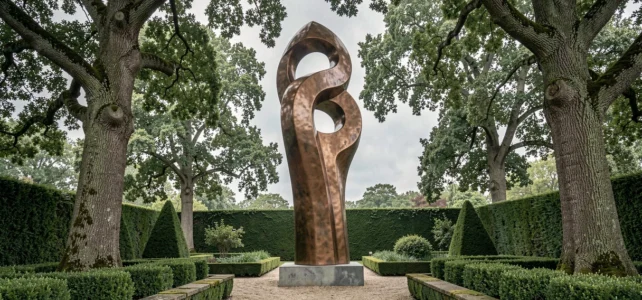
Large garden sculptures are increasingly taking center stage in landscaping projects. Far from being mere ornaments placed in a corner of the lawn, these XXL pieces now serve as focal points to structure an outdoor space. Reinforced resin, recycled metal, reconstituted stone: the available materials have diversified, along with the technical constraints to anticipate before any purchase.
Weight, anchoring, and load-bearing soil: what the XXL size really changes
A garden statue exceeding one and a half meters raises questions that a small decorative Buddha never does. First, the weight: a piece made of reinforced fiberglass resin remains relatively light compared to its stone equivalent, but a sculpture made of metal or concrete can weigh several dozen kilos.
This weight has direct consequences on installation. Placing an XXL statue on unprepared loose soil risks gradual sinking or toppling in strong winds. A stable base made of concrete or compacted slabs is the minimum requirement for any piece exceeding one meter in height.
The choice of location also depends on exposure. A sculpture facing south will suffer more UV degradation, while a shaded area promotes moss growth. For those looking for giant sculptures and XXL outdoor statues suitable for their terrain, these parameters affect both longevity and visual appeal.
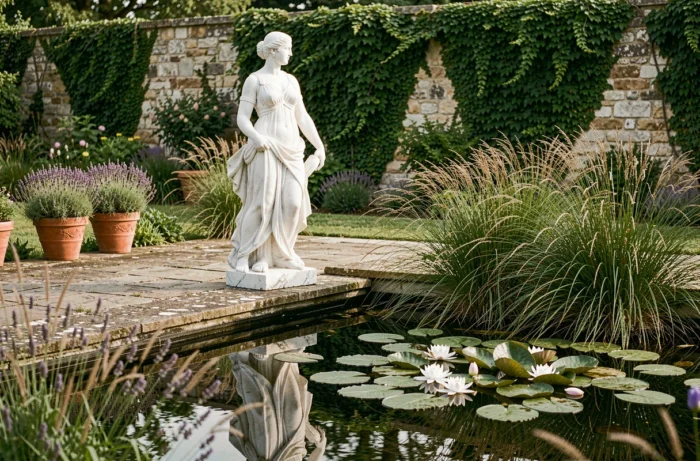
Reinforced resin, recycled metal, or stone: which material for an XXL outdoor statue
Competing content often touts resin as a miracle material. The reality is more nuanced, and the choice depends on the specific environment of the garden.
Fiberglass and reinforced resin
Reinforced fiberglass resin offers better resistance to frost, UV rays, and moisture than standard consumer resin. This distinction is rarely specified in product sheets. A low-quality resin will eventually yellow or crack after a few winters, while reinforced resin retains its pigments much longer.
The main advantage remains the volume-to-weight ratio: a life-sized animal silhouette in fiberglass can be moved by two people, whereas its stone equivalent would require a lifting device.
Metal and recycled steel
Metal sculptures bring a different aesthetic, often more contemporary. Corten steel, valued for its natural rust patina, integrates well into plant-dominant gardens. However, any metal exposed without appropriate anti-rust treatment degrades quickly, including galvanized steel in saline or coastal areas.
Natural stone and reconstituted stone
Stone remains the most durable material but also the most demanding. The weight makes transport costly and installation complex. Reconstituted stone offers an interesting compromise: credible mineral appearance, reduced weight, and good frost resistance if the mix is of high quality.
- Reinforced resin: lightweight, fine details, sensitive to mechanical shocks, easy maintenance
- Metal (Corten steel, wrought iron, aluminum): contemporary finish, evolving patina, requires anti-corrosion treatment
- Natural or reconstituted stone: maximum durability, high weight, installation requires a suitable base
- Treated wood: visual warmth, rapid aging without UV-resistant varnish, suitable for temporary pieces
Preventive maintenance of large garden statues
Maintenance is the blind spot of most buying guides. An XXL sculpture represents an investment, and its longevity directly depends on the care given in the first years.
Recent technical recommendations converge towards gentle cleaning every six to twelve months, complemented by an annual visual inspection of joints, ground fixings, and areas of water stagnation. In polluted or saline areas, more frequent rinsing is recommended to avoid the accumulation of corrosive deposits.
The choice of protective product must correspond to the material. An anti-rust for metal, a varnish or UV-resistant sealant for wood, and breathable non-yellowing products for resin. Applying an unsuitable product can accelerate degradation rather than slow it down, particularly film-forming varnishes on porous surfaces.
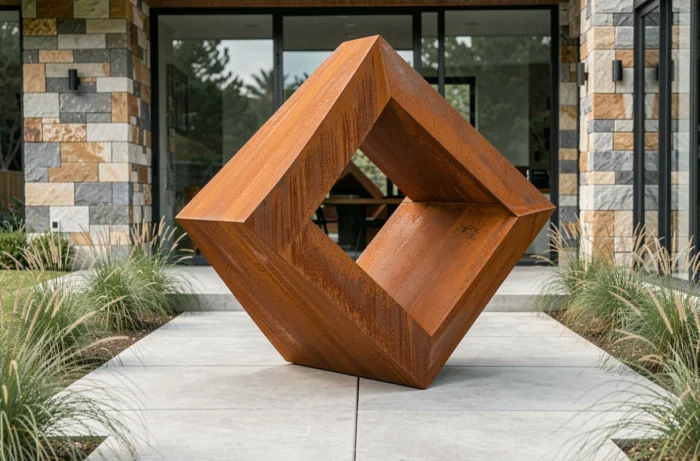
XXL sculpture and landscape integration: beyond decoration
The trend observed in 2026 leans towards the concept of a “gallery garden,” where each sculpted piece interacts with the surrounding vegetation rather than standing apart. This approach changes how one chooses and positions an outdoor statue.
A black resin gorilla placed on a flat lawn creates a spectacular but momentary effect. The same gorilla installed among tall grasses, with low-angle lighting, creates a scene. Landscape integration transforms a decorative statue into a structuring focal point.
Some concrete principles guide this integration:
- Maintain a proportion between the size of the sculpture and the available space (a two-meter piece in a thirty-square-meter garden overwhelms the rest)
- Consider sightlines from main windows and the terrace, not just from the path
- Pair the sculpture with a complementary plant or mineral element (trimmed hedge in the background, gravel bed, low flowerbed)
The choice of style remains personal. Realistic animals, abstract silhouettes, stylized characters, or meditative Buddhas serve different intentions. What distinguishes a successful arrangement from a mere impulsive purchase is the coherence between the piece, its base, its plant environment, and the scale of the garden.
Field feedback varies on the question of quantity: some landscapers recommend a single strong piece per space, while others work in thematic series. The only constant remains the relationship between the size of the sculpture and the available depth of field. An XXL statue needs distance to be appreciated; otherwise, it loses the presence effect that justifies its size.