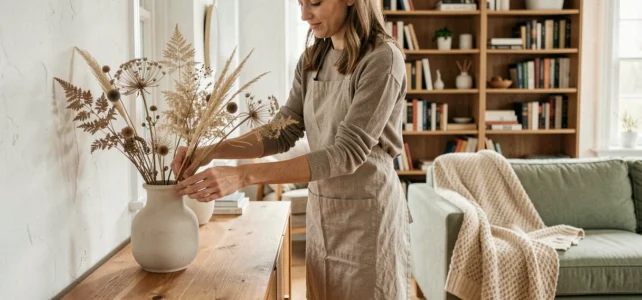
The transformation of an interior does not rely on the accumulation of trends. It is based on precise technical choices, often overlooked by mainstream content, that relate to light, materials, and the hierarchy of volumes.
Color Temperature and Light Spectrum: The Most Underestimated Lever in Interior Decoration
We observe that the majority of decoration projects miss their target right from the choice of light sources. Poorly calibrated lighting cancels out the effect of a well-thought-out color palette.
The distinction between warm and cool color temperature is not enough. What matters is the Color Rendering Index (CRI) of each fixture. A CRI below 80 distorts wall shades, textiles, and woodwork. We recommend a CRI above 90 for any room where color plays a structural role.
Multiplying light points remains a valid principle, but layering is even more important. Three levels must coexist in every living space: diffuse general lighting, directed functional lighting, and accent lighting to create depth. Without this layering, the space appears flat, regardless of the furniture.
Recent trends in interior lighting confirm this approach: light becomes a design tool in its own right, not just a complement. To delve deeper into these topics and find concrete ideas, you can explore the home section on Espress Home, which regularly addresses these issues.
Biophilic Decoration: Going Beyond the Cliché of Green Plants
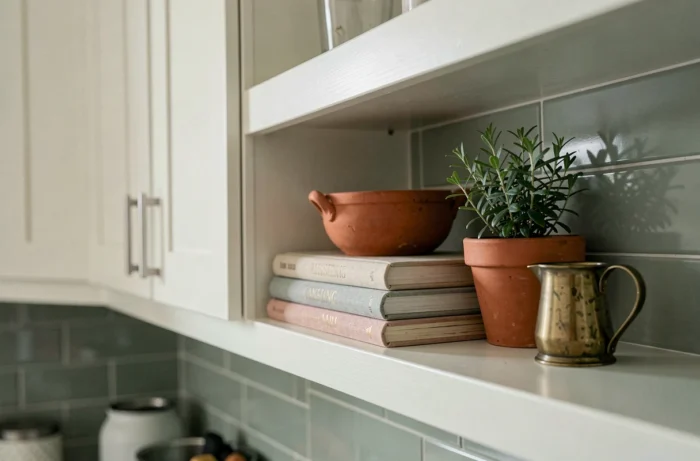
Biophilic decoration has changed its status. It is no longer a cosmetic trend consisting of placing a monstera in a corner. It is a documented approach to interior design that explicitly aims to reduce stress and improve emotional well-being.
The principles that structure this approach are precise and often unknown:
- The refuge/perspective couple: each room must offer at least one protected space (a reading nook, an alcove) and an unobstructed view to the outside or an open volume
- The visual and non-visual connection to nature: beyond plants, it involves integrating sounds of water, floral scents, and organic textures like raw linen or natural stone
- Natural light as the primary material: increasing solar gains, including through mirror plays or glass partitions, before considering artificial lighting
The systematic integration of these elements is associated with a measurable reduction in physiological stress responses. In interior decoration, biophilia functions as a tool for emotional regulation, not as a decorative accessory.
Saturated Colors and Raw Materials: The Return of Character in Living Spaces
White and gray minimalism is receding. We are seeing a marked return to saturated palettes, particularly deep terracottas, forest greens, and midnight blues. This shift is not merely aesthetic: it reflects a search for character and grounding in a living space.
The choice of a strong color on a single load-bearing wall is enough to restructure the perception of an entire room. The technical rule remains the same: a saturated color requires lighting with a CRI of 90+ to reveal its depth without turning dull.
Combining Color and Raw Material
Unfinished materials (waxed concrete, unvarnished solid wood, patinated metal) create a textural contrast that adds density to the space. A common mistake is to multiply smooth and uniform finishes, resulting in a photographic interior but lacking soul.
A natural stone countertop in a kitchen, a handmade terracotta floor in an entryway: these material choices are structural decisions that define the character of an interior far more than any decorative object.
Hierarchy of Volumes and Circulation: The Invisible Architecture of Your Interior
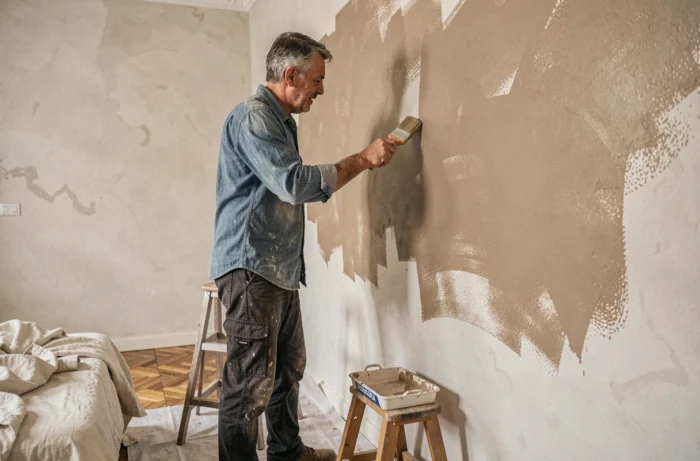
Transforming an interior without rethinking circulation is like changing the bodywork without touching the engine. The quality of a space is first measured by the fluidity of its passage axes.
The rule of 90 centimeters of clearance between two pieces of furniture is a functional minimum, not a goal. In a living room, we recommend mapping out circulation lines before placing any furniture. The sofa, table, and bookshelf should be organized around these axes, not the other way around.
Creating Zones Without Partitioning
Defining spaces does not necessarily require partitions. A change in flooring between the living area and the dining area, a difference in light fixture height, a rug with calibrated dimensions: these devices create readable micro-territories without closing off the volume.
In small spaces, multifunctional furniture (storage bench, extendable console) frees up square meters on the floor. But the real gain comes from eliminating unnecessary furniture. A enhanced interior is often a lightened one, where each piece of furniture justifies its presence through daily use.
Sustainable Design and Responsible Decoration: A Technical Criterion, Not a Marketing Argument
The decoration market is experiencing a shift towards quality and durability. Low-cost decorative DIY is receding, while investment in lasting pieces is increasing.
This shift has concrete implications for material choices. A certified solid wood piece of furniture costs more upfront, but its lifespan and ability to patina make it more economical over ten years than an equivalent in particle board. The same reasoning applies to textiles: a washed linen curtain will last for years without losing its shape, whereas a low-end polyester will fade in two seasons.
The responsible approach aligns with the aesthetic approach here. Durable materials age better, develop a patina, and gain character over time. An interior designed with this logic does not go out of style; it matures.
Ultimately, the transformation of an interior hinges on three technical decisions: light, materials, and circulation. Everything else, objects, accessories, supplementary textiles, serves to dress a structure that is already solid. Without these foundations, no decorative trick produces a lasting effect.