A garden that lasts relies less on the accumulation of plants than on the coherence between the soil, exposure, and planting plan. Transforming an outdoor space into a dream garden requires thinking in layers, circulation, and plant autonomy, not just decoration.
Substrate and drainage: the technical foundation that garden design neglects
We regularly observe plantings that decline within two seasons because the substrate was never corrected. A compact clay soil retains water in winter and hardens in summer. Sandy soil allows nutrients to wash away. Before choosing any plants, a texture test (a roll of moist soil) and an observation of natural drainage after heavy rain provide more information than a flower catalog.
Permanent organic mulching reduces watering and nourishes the soil simultaneously. Shredded wood chips, fallen leaves, hemp straw: the layer must be thick enough to block weed emergence while allowing the surface to breathe. This is the only intervention that improves soil structure each year without additional effort.
To delve deeper into the choices of plants and materials suited to each configuration, you can learn more about Déco et Jardin, which covers these topics in detail.
Low-maintenance plants: designing a nearly autonomous garden
The recent trend of eco-designed gardens is based on a simple principle: zero input after planting. The choice of species is made according to the existing soil and local climate, not the visual effect in garden centers. Garden designers are now betting on ecological resilience rather than horticultural perfection, with results that remain beautiful season after season.
In practical terms, this involves a rigorous selection:
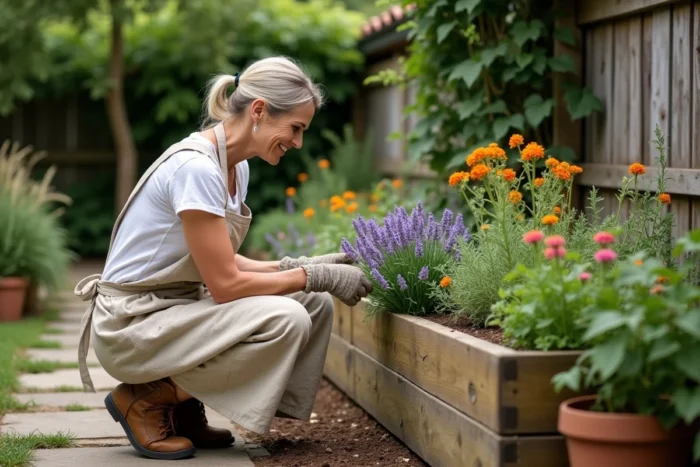
- Ground-cover perennials suited to the exposure (perennial geraniums in partial shade, sedums in full sun) that limit weeding by naturally colonizing the free space
- Flowering shrubs with staggered blooms that ensure visual interest for several months without regular pruning (dogwoods, viburnums, witch hazels depending on the climatic zone)
- Ornamental grasses that structure the space in winter when the rest of the garden is resting, requiring only an annual cut at the end of winter
- Climbing plants capable of covering an unsightly fence or wall in two to three seasons (honeysuckle, star jasmine, small-growing clematis)
Intelligent water management complements this approach. Rainwater harvesting, systematic mulching, grouping plants by water needs: a garden designed by watering zones consumes significantly less than a uniform lawn.
Structuring the outdoor space with wood and pathways
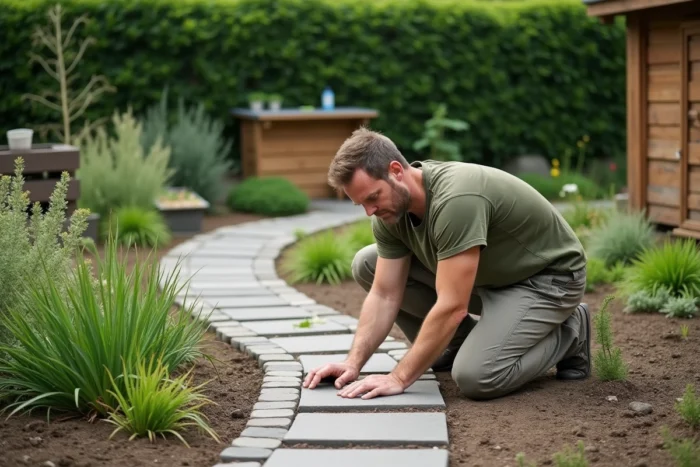
A dream garden is meant to be walked through. The circulation between areas (rest, vegetable garden, play for children, flower beds) must be considered before planting. We recommend marking the paths on the ground with a hose for several days to observe natural routes before finalizing anything.
Wood remains the most versatile material for structuring a garden. Decking, pergolas, raised borders, integrated benches: it adapts to all styles. However, the choice of species determines durability. Class 4 wood (resistant to permanent contact with soil and water) avoids premature replacements. Treated pine remains economical, but larch or untreated Douglas fir gracefully weather without finishing products.
The borders between lawn and flower beds are not an aesthetic detail. They prevent the grass from invading the flower beds and reduce maintenance time. Corten steel borders, thin and nearly invisible, provide a clean result that lasts for years without warping.
Low-voltage outdoor lighting
A garden that only exists by day loses half of its potential. Low-voltage lighting (12V) can be installed without an electrician in most cases. A few recessed spots along a path, a spotlight aimed at a remarkable tree, and string lights on a pergola are enough to extend the use of the garden well beyond sunset.
Pool and outdoor decor: integrate without distorting
The installation of a pool radically transforms a garden, but it imposes often underestimated constraints. Beyond the water surface, one must plan for decking, regulatory distances from property lines, the technical room, and access for maintenance.
In terms of water treatment, salt electrolysis coupled with UV stands out as the best compromise for significantly reducing the use of chemicals. This combination simplifies daily management and integrates better into a garden designed to limit inputs.
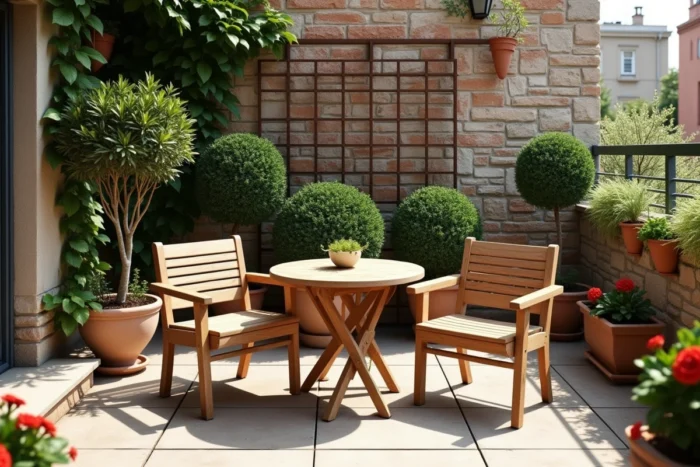
On the decor side, coherence takes precedence over accumulation. A Mediterranean style with terracotta jars does not coexist with a black woven resin garden set. We observe the best results when the layout is limited to two or three dominant materials (stone, wood, metal) used throughout the space.
Child-friendly design
A space dedicated to children is not just a swing placed on the lawn. A sandbox integrated into a wooden structure, a small raised vegetable garden at their height, or a sensory path (gravel, bark, slabs) occupy them sustainably and contribute to the overall aesthetic of the garden.
The key to a garden that remains a dream space over time is to resist the temptation to add. Each element must justify its place by its use or by its contribution to the ambiance. A well-placed mass of grasses is worth three Pinterest statues. A successful garden is one where nothing can be removed without losing something.