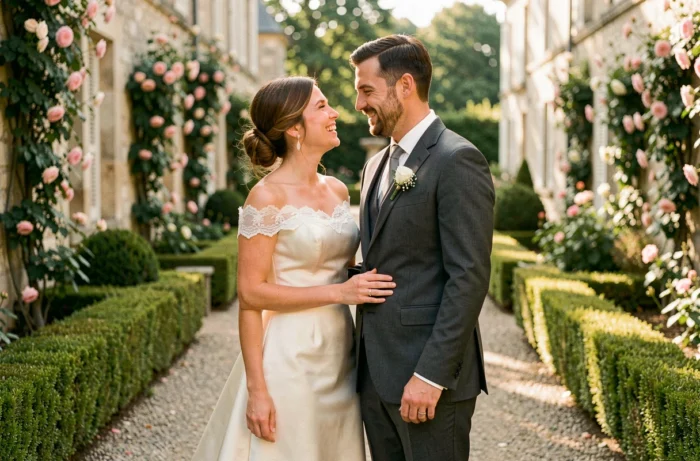
Organizing a pleasant wedding involves making choices that differ from those dictated by visual trends. Overloaded schedules of activities sometimes leave couples feeling like they have gone through their own day without having had the time to sit together.
Aesthetic pressure and overload of activities: what the couple loses along the way
A wedding designed to produce visual content imposes a precise rhythm. Every moment becomes a sequence: the unveiling of the dress, the slow bouquet toss, the sparkler exit. The vendors themselves note that some schedules leave no free time between activities.
The result for the couple is a day experienced in fast forward. Feedback from the field varies on this point: some couples love this intensity, while others regret not having had ten minutes alone to grab a bite. The difference often comes down to a choice made in advance, that of limiting the activities to three or four highlights rather than filling every half hour.
Among the elements that work without burdening the schedule, we regularly find the same ones on the Cœur de Mariage website and in couples’ feedback: an open-access photobooth, a guest book available all evening, a collaborative playlist. These setups run themselves, without requiring the couple’s attention.
Wedding budget: balancing decor and lived experience
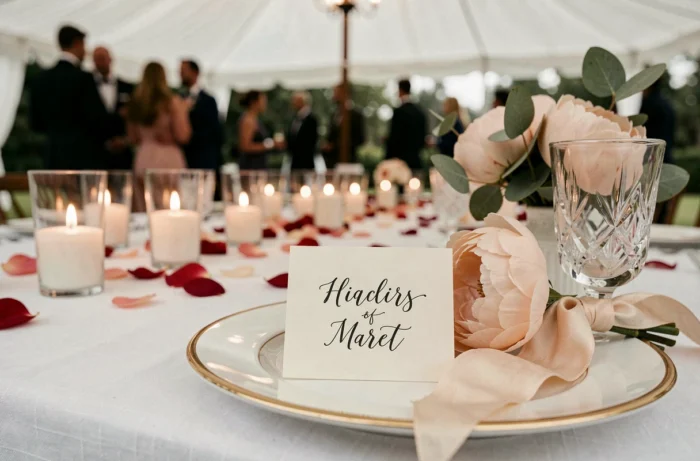
The decoration budget absorbs a significant portion of the budget in most weddings. Fresh flowers, personalized signage, furniture rental: these elements are expensive and are consumed in a few hours. Couples who choose to reduce this item to invest elsewhere make a calculation rarely highlighted in traditional guides.
Redirecting the decoration budget towards the meal or music changes the tone of the day. A caterer who works with local products, a live band instead of a DJ, a carefully selected wine cellar: these items directly influence what guests remember from the evening.
Here are a few areas where the trade-off deserves reflection:
- The floral scenography: a simple composition on the tables costs a fraction of a complete arch, and guests spend more time seated than contemplating the entrance of the ceremony.
- The coordinated stationery (menus, place cards, program): a single well-designed piece often replaces four redundant elements.
- Paid activities (professional photobooth, fireworks, lantern release): one memorable activity is better than three forgettable ones.
Venue choice: what matters beyond the photos
The reception venues most shared on social media are not always the most comfortable. A venue with a spectacular view may involve difficult access for elderly guests, disastrous acoustics for the dance party, or complex catering logistics that drive up the bill.
A venue suited to the actual number of guests ensures a warm atmosphere. A room too large for the final guest list gives an impression of emptiness that decoration struggles to compensate for. Conversely, a slightly compact space creates intimacy and energy.
Three often underestimated criteria in venue selection:
- The quality of the on-site cuisine or the freedom to choose one’s caterer, which directly affects the meal.
- On-site or nearby accommodation, which avoids transportation issues at the end of the evening and allows the couple to enjoy the next morning.
- The allowed noise level and the end time of the evening, two constraints that shape the entire atmosphere of the celebration.
Wedding preparations: organize less to enjoy more
Wedding planning timelines available online sometimes list over a hundred tasks spread over twelve to eighteen months. This thoroughness is reassuring, but it can also create a disproportionate mental load relative to the nature of the event.
A couple that identifies its four structuring decisions—the venue, the caterer, the photographer, and the attire—and treats the rest as secondary significantly reduces the stress of preparations. Peripheral details do not need to be decided months in advance.
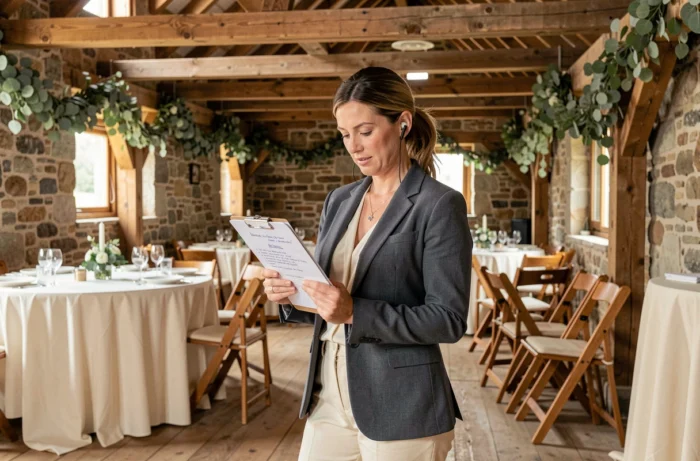
Hiring a wedding planner is justified when the couple lacks time or is organizing a logistically complex event (multiple locations, international guests, separate ceremony and reception). For a modest-sized wedding in a single location, day-of coordination can be entrusted to an organized friend, provided they are given a clear schedule.
Civil or religious ceremony: the moment that remains
When couples are asked several years after their wedding, the moment most often cited as significant is the ceremony, not the dessert or the first dance. Whether the ceremony is civil, religious, or secular, it is the only moment when all guests’ attention converges on the couple.
The secular ceremony offers a freedom of format that others do not allow. Selected readings, interventions from loved ones, live music: each element can be calibrated to last between twenty and forty minutes, without imposed protocol. Investing time in writing the ceremony yields more than investing in cocktail decoration.
The sound system also conditions the quality of this moment. Outdoors, a ceremony without a microphone becomes inaudible beyond the third row. A simple system, with a standing microphone for speakers, transforms the experience for guests.
Reducing the number of activities, focusing on the ceremony, and keeping free slots in the schedule: these three trade-offs are enough to change how the couple and their guests remember the day.