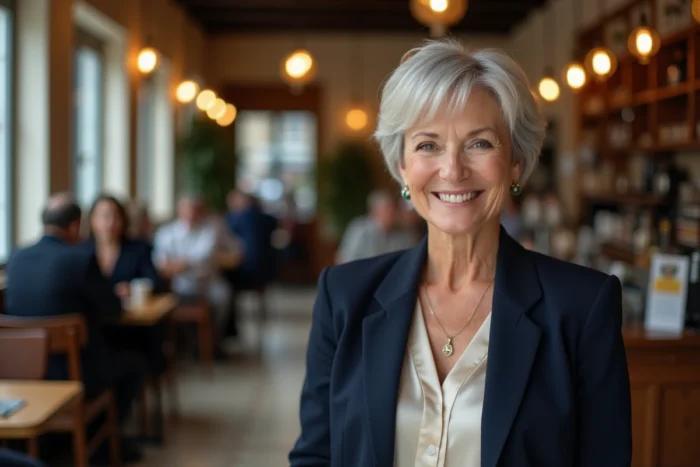
Hair changes over time: the fiber thins, density decreases, and texture evolves. Choosing a short haircut after 60 is not just about copying a style seen in a magazine. The main risk, rarely discussed, relates less to the choice of the cut itself than to how it interacts with the bone structure of the face, the brow line, and the complexion. A haircut that is too graphic can hollow out the features, while a textured cut softens them.
Thinned Hair After 60: Adapting the Cutting Technique to the Hair Texture
Most articles on the subject suggest names of cuts (pixie, bob) without ever explaining why the same cut can rejuvenate one woman and age another. The answer lies in the technique applied to the hair, not in the overall shape.
Recent professional training in hairdressing emphasizes one specific point: on weakened hair, the work on volume takes precedence over the sharpness of lines. A cut with overly defined contours, with marked angles at the temples or nape, accentuates the shadowy areas of the face. In contrast, a gradual thinning or textured layering creates movement that captures light and diverts attention from expression lines.
Finding the right modern short haircut for older women therefore requires a diagnosis of hair texture before any discussion about shape. Asking for a “pixie” without specifying the type of finish is like ordering a dish without indicating how it should be cooked.
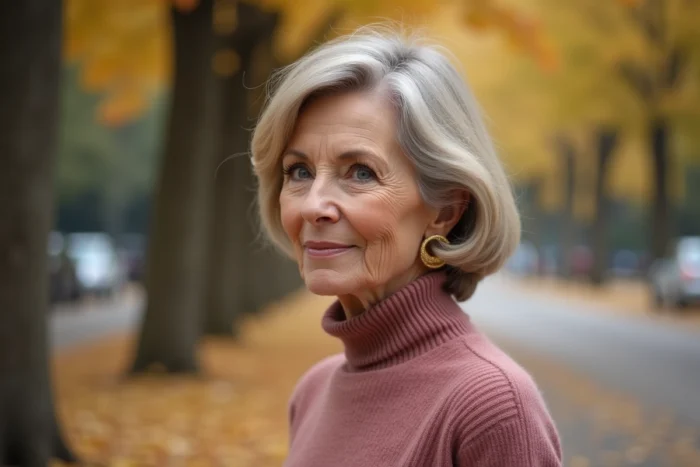
Specifically, on fine and sparse hair, hairdressers trained in this issue prioritize:
- An internal layering (by thinning the inner layers) rather than a visible layering, to add volume without revealing the lack of density
- Slightly uneven lengths around the face, which break symmetry and create a natural movement effect
- A razor or sculpting scissors technique on the ends, which avoids the “helmet” effect of overly compact cuts
Short Haircut and Facial Features: Areas to Protect
What does it mean to harden the features? In terms of hairstyling, it means exposing or accentuating the angular areas of the face: prominent cheekbones, a defined jawline, hollow temples, a wide forehead. With age, the loss of facial volume makes these angles more visible. A poorly calibrated short haircut amplifies this phenomenon.
The most sensitive area is between the ear and the cheekbone. A cut that completely exposes this area (like a very short pixie on the sides) can hollow out the face. Keeping a bit of length in this area, even a few centimeters, is often enough to soften the overall look.
The Underestimated Role of Bangs
Curtain bangs, worn in two soft strands framing the forehead, work well because they break the horizontal line of the forehead without weighing it down. In contrast, a straight and thick fringe can freeze the upper part of the face and draw attention to crow’s feet.
A tapered and slightly asymmetrical fringe softens the forehead without hiding the eyes. This nuance makes all the difference between a rejuvenating effect and an aging one.
Short Hairstyle and Glasses: An Often Overlooked Match
A significant proportion of women over 60 wear glasses all the time. The frame radically changes the perception of the haircut, and this interaction is rarely considered during a visit to the hairdresser.
Thick and angular frames (like rectangular ones) require a cut that compensates for their rigidity. A soft layering around the temples and ears balances the hard lines of the frame. In contrast, round or oval glasses can support a more structured cut, as the curves of the frame already soften the upper part of the face.
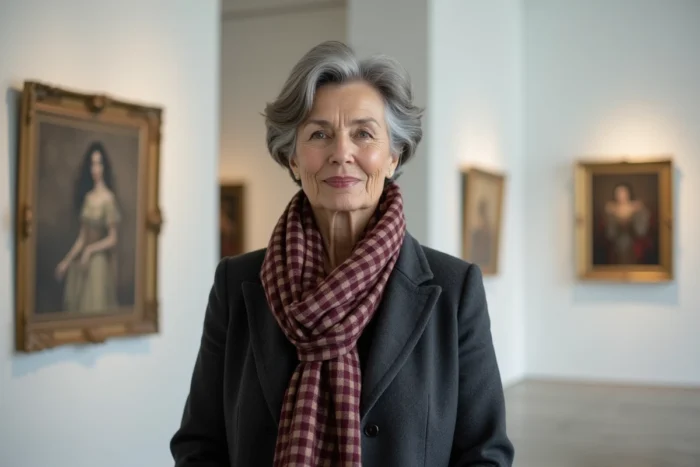
Bringing your glasses to the salon is as useful as bringing an inspirational photo. The hairdresser can adjust the height of the layering and the volume of the sides based on the shape of the lenses and the thickness of the arms.
Color and Short Haircut After 60: What Works Without Forcing
Color plays a direct role in the perception of the hardness of features. Very dark and uniform shades (jet black, monochrome brown) create a stark contrast with the skin, which loses its radiance over time. This contrast accentuates the natural shadows of the face.
Two approaches yield consistent results with a short haircut:
- Subtle highlights on gray or white hair: a few lighter strands around the face capture light and lighten the overall look without requiring heavy maintenance
- Acceptance of natural gray with a textured cut: the movement of the cut compensates for the uniformity of the color, and the result gains modernity compared to smooth and flat gray
- Warm tones (ash blonde, golden brown) in semi-permanent color, which fade gradually without visible demarcation at the roots
A well-textured short cut on natural gray hair looks more modern than a forced color on flat hair. Texture almost always outweighs color in creating a youthful effect.
Maintenance and Frequency of Cuts
A practical point that “inspiration” articles rarely mention: a short haircut requires more frequent visits to the salon than a long haircut. The shape deforms quickly, especially on fine hair. An interval of four to six weeks between cuts helps maintain volume and avoid the “messy growth” effect that weighs down the face.
Some salons now offer preliminary consultations dedicated to women who will lose their hair due to medical treatment. The goal is to achieve a short haircut in advance, designed to remain soft even during the regrowth phase. This approach, focused on comfort and self-image, illustrates how the short haircut goes beyond mere aesthetic concerns for women over 60.
The final choice remains personal, but it benefits from being informed by a technical diagnosis rather than a gallery of photos. The shape of the hair, the structure of the face, the glasses worn daily, and the natural color form a whole. Treating each parameter separately risks a flattering cut in photos but disappointing in the mirror.