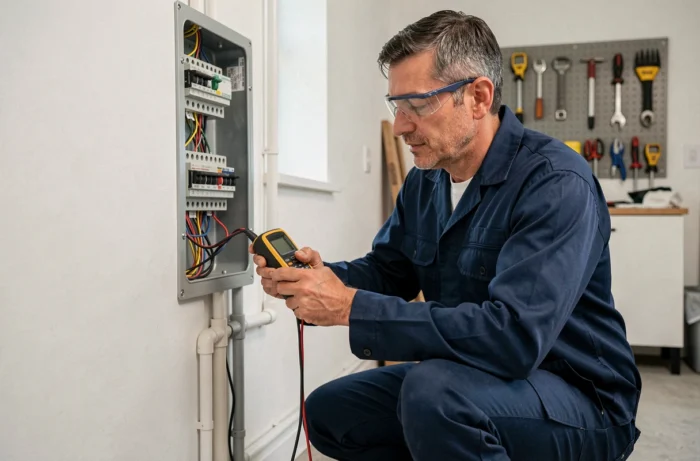
A circuit breaker that trips after the installation of a new oven, an outlet that darkens in the bathroom, an outdated electrical panel in a 1970s house: these situations require a competent electrician. Choosing the right professional for your home electrical work is not just about comparing quotes. It’s primarily a matter of safety, and then of regulatory compliance.
Check legal qualifications before any electrical quote
Before even discussing price or deadlines, one point deserves your full attention. Working as an electrician in France is a regulated craft activity. The professional must either have a diploma (CAP, BEP, Bac pro in electricity or electrotechnics) or at least three years of experience in the field.
This requirement also applies to self-employed workers. If a craftsman works alone, he must be able to prove his qualifications to the chamber of trades and crafts. In the case of a company, a qualified person must supervise the work sites.
You may have noticed that many guides simply say “check the certifications” without specifying which ones really matter? Here are the documents to request before signing anything:
- The SIREN number and the VAT number, which can be verified for free on the Sirene directory of INSEE. The company must be active, not deregistered.
- The ten-year insurance certificate and professional liability insurance, valid for the current year. Without them, you have no recourse in case of poor workmanship.
- A proof of professional qualification (diploma or experience certificate). If the craftsman refuses to provide it, move on.
A serious professional like those listed on electricien-cymelec.fr will present these elements spontaneously, without you having to insist.
NF C 15-100 standard: what your electrician must master
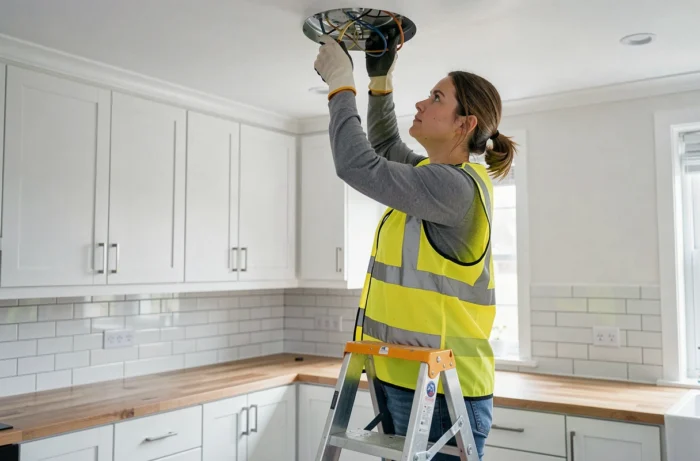
The NF C 15-100 standard governs all electrical installations in homes in France. It sets the minimum number of outlets per room, the placement of switches, circuit protection, and grounding. Any new installation or complete renovation must comply with this standard.
A new edition of the NF C 15-100 was published in 2024. It modifies certain requirements for new domestic installations or those completely renovated since 2025. An electrician who still works according to the old rules exposes your home to a compliance refusal during the electrical diagnosis.
Why this detail changes your choice
During a first contact, ask a simple question: “Do you work according to the latest edition of the NF C 15-100?” The answer will tell you a lot. An up-to-date professional will explain the recent changes. Another will remain vague or avoid the subject.
This standard is not just an administrative formality. It conditions the safety of your electrical panel, the sizing of circuits, and protection against surges. A quote that does not mention compliance with NF C 15-100 is a warning sign.
Reading an electrician’s quote without getting trapped
The quote is the most revealing document of a craftsman’s seriousness. A good electrician’s quote is not limited to a line “electrical work: X euros”.
Each item must be detailed: type of cable used, brand of components (circuit breakers, residual current devices), number of light points, number of outlets to install or replace. A precise quote protects both the client and the craftsman in case of a dispute.
Items to compare between two quotes
When you receive several proposals, don’t just look at the total at the bottom of the page. Compare the following elements:
- The supply of materials: some electricians charge for materials at catalog price, others apply a markup. Ask for the details.
- The cost of labor per hour or flat rate. An abnormally low rate often hides an undeclared or underqualified craftsman.
- Travel and commissioning fees, sometimes absent from the first quote but added to the final bill.
- The explicit mention of the ten-year guarantee and compliance with the current standard.
A serious quote also includes a validity date and an estimated intervention time frame. If this information is missing, request it in writing before accepting.
Customer reviews and word-of-mouth: filtering the true from the false
Online reviews are a natural reflex for evaluating an electrician. They remain useful, provided you read them methodically.
Favor reviews that describe a specific intervention: type of work done, respect for deadlines, cleanliness of the site, explanation of the work to the client. A detailed review is worth more than twenty five-star ratings without comments.
The case of negative reviews
One or two negative reviews out of several dozen do not disqualify a professional. What matters is the craftsman’s response: does he take the time to explain the situation? Does he propose a solution? A professional who systematically ignores criticism or responds aggressively deserves your attention.
Word-of-mouth remains the most reliable filter. A neighbor or a close friend who has had their electrical installation redone and recommends their craftsman gives you information that you won’t find on any platform.
Choosing a qualified electrician for a renovation or repair comes down to verifying three concrete things: regulatory qualification, mastery of the NF C 15-100 standard, and transparency of the quote. The rest (availability, price, proximity) is negotiable. These three points are not.