
On a construction sites, hiking, or in the pocket of a loved one who simply wants to call and hang up, a phone without internet serves a specific purpose. The problem is that in 2024, this type of device is going through a technical turbulence that most guides are unaware of: the planned shutdown of 2G and 3G networks in France radically changes the models that can still be purchased without risking obsolescence in the short term.
2G/3G Shutdown: The Trap That Makes Half of Basic Phones Obsolete
There are still dozens of classic phones available in stores or online at low prices. The majority only work on 2G, sometimes on 3G. The issue is that French operators have begun the gradual shutdown of these networks, with a generalization expected by the end of 2026 according to the schedule published by Arcep.
In practical terms, buying a phone in 2024 that only supports 2G/3G means purchasing a device whose network lifespan will not exceed two years. For someone looking for simplicity and durability, this is a contradiction.
Checking 4G and VoLTE compatibility before any purchase becomes the first reflex to have. VoLTE (Voice over LTE) allows voice calls to be made over the 4G network. Without this function, even a phone labeled “4G” may no longer be able to make calls once 2G/3G is shut down. The problem: product specifications still poorly mention this compatibility. Often, one must search for information in forums or contact the manufacturer.
When looking for a basic mobile phone without internet, this network criterion takes precedence over design, price, or button size.
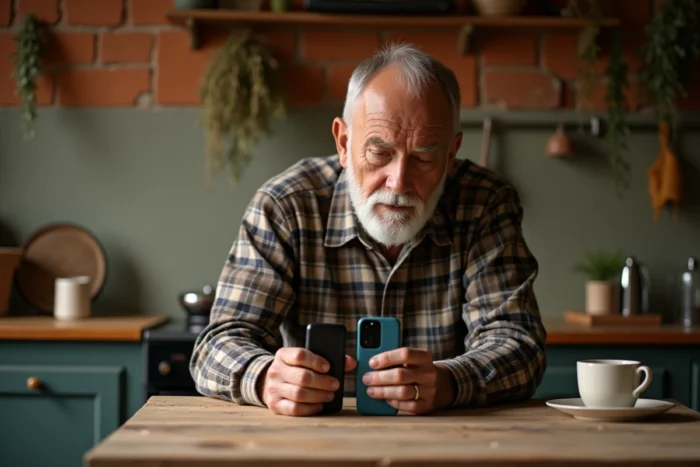
Basic Phone Compatible with 4G: The Concrete Criteria to Check in Store
Once the network filter is applied, the number of models available is significantly reduced. Here’s what really matters when holding the device in hand.
- 4G band and VoLTE certified by the operator: a phone may support 4G without the operator having validated VoLTE on it. Checking the compatibility list on the operator’s website (Orange, SFR, Bouygues, Free) before purchasing avoids unpleasant surprises.
- Standby time: on a phone without a touchscreen or apps, we expect several days of standby. Some models last more than a week, while others barely last three days depending on battery quality and the management of the more power-hungry 4G network compared to 2G.
- SIM format: older models use mini-SIM or micro-SIM. Most operators now provide nano-SIMs. An adapter solves the problem, but a phone that directly accepts nano-SIM simplifies the setup process.
- Presence or absence of hidden connected features: some “basic” phones come with a rudimentary web browser, access to social networks, or a basic app store. If the goal is zero internet (for a child, a senior, or by personal choice), check that Wi-Fi and mobile data can be disabled or are absent from the phone.
The Case of Physical Buttons and Ergonomics
A separate button keyboard remains the standard in this segment. Feedback varies on this point, but wide and well-spaced buttons make a real difference for elderly users or those wearing work gloves. A good test in-store: dial a ten-digit number without looking at the screen. If you press two buttons at once, the keyboard is too cramped.
The screen itself doesn’t need to be large. A display readable in bright sunlight with sufficiently sized characters matters more than the diagonal size.
Phone Without Internet for Seniors or Children: Not the Same Specifications
These two audiences are often grouped under the label “simple phone,” but their needs differ significantly.
For a senior, the priority revolves around screen readability, sound volume, and the SOS button. Some models include an emergency call button on the back, which sends a geolocated SMS and automatically calls one or more predefined contacts. This function alone sometimes justifies the choice of one model over another.
For a child or teenager, the need is different. The aim is to provide a means to contact and be contacted, without opening the door to social networks, videos, or web browsing. A basic mobile phone without internet fulfills this role, provided it is verified that no data access is possible (no built-in Wi-Fi, no browser).
The Question of the Plan
A voice/SMS plan without data often costs less than a standard plan. Some operators still offer plans for a few euros a month for this type of use. Blocking mobile data at the plan level (and not just in the phone settings) provides an additional layer of security, especially for a child.
Brands and Models of Basic 4G Phones: What Actually Exists on the Market
Nokia remains the historical reference in the segment with several regularly updated models. Some of their flip or bar phones include 4G and VoLTE. Motorola also offers a few references, as do lesser-known brands like Doro (focused on seniors) or Emporia.
The market remains narrow. One does not find the same depth of range as with Samsung Galaxy or iPhone smartphones. In practice, the choice is between a handful of references available in stores or online.
A point of caution: models imported from outside Europe may support 4G but on frequency bands incompatible with French operators. Check compatibility with French 4G bands (mainly B3, B7, B20, B28) to avoid ending up with a mute phone in certain areas.
The price of a basic 4G-compatible phone remains accessible, far from the prices of Android or Apple smartphones. The mechanical durability of these devices (no fragile touchscreen, often reinforced casing) more than compensates for the modest investment. For field use, professional purposes, or as a second phone, the simplicity of a device without internet remains a perfectly rational choice, provided one does not ignore the network constraint that has been redefining this market since 2024.