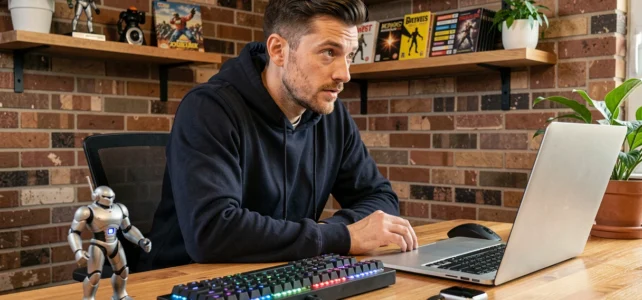
The market for geek products is no longer limited to figurines and logo t-shirts. Since 2025, a new wave of items combines discreet technology, sleek design, and sharp cultural references. Pocket AI gadgets, screenless connected accessories, and officially licensed mood lamps are redefining what it means to “have a geek item” at home or in the office.
This overview highlights the categories that truly structure this offering, their limits, and what deserves your attention.
Pocket AI Gadgets and Invisible Connected Objects: The Geek Trend of 2026
The category that is shaking up the geek product market in 2026 is visually unremarkable. Audio recorders with built-in AI, capable of automatically transcribing and summarizing meetings or classes, have become everyday items for freelancers, students, and employees. According to the guide to the best high-tech gadgets of 2026 published by m8d, this “pocket AI” is one of the four major trends of the year.
At the same time, so-called “invisible” connected objects are gaining ground. Subscription-free connected rings, wallet trackers compatible with Apple and Google networks: these geek products incorporate advanced functions (sleep tracking, location, home automation) without displaying flashy tech aesthetics. The same m8d guide explicitly distinguishes this trend, where the geek function exists without the geek appearance.
This evolution has a concrete effect on specialty shops. Platforms like geek-eshop.com now list these accessories alongside figurines and mood lamps, a sign that the very definition of “geek product” is expanding beyond pop culture.
European Regulation on Geek Connected Objects: What the Cyber Resilience Act Changes
One aspect that most geek buying guides completely overlook concerns the regulatory framework. The European Cyber Resilience Act imposes new cybersecurity obligations on manufacturers of connected objects sold in the EU. Guaranteed security updates, vulnerability reporting, accessible technical documentation: these requirements directly affect the connected gadgets found in geek aisles.
In practical terms, a Bluetooth tracker, an app-controlled connected lamp, or a pocket AI recorder must now meet these criteria to be legally marketed in Europe.
For consumers, this means that a connected gadget without an updated CE compliance mention deserves caution. Products imported through non-EU marketplaces do not always comply with these obligations. Field reports vary on this point: some sellers display a declarative compliance without verifiable certification.
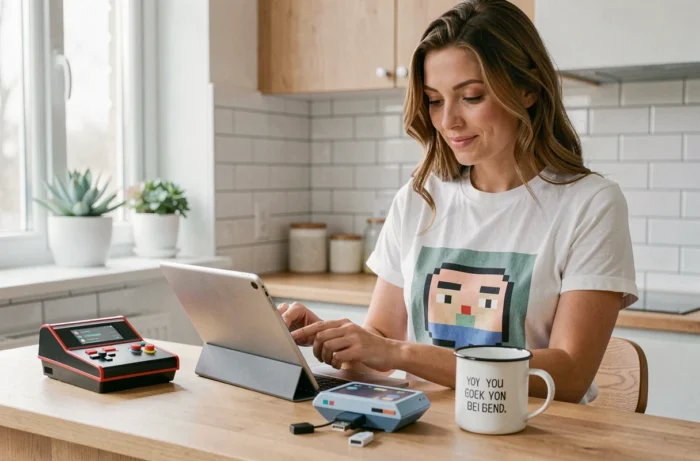
Geek Lighting and Office Accessories: Beyond the Disposable Gadget
Mood lamps remain among the best-selling geek products. Retro-pattern neon lamps, licensed night lights (video game characters, sci-fi icons), star projectors: the offering is abundant. However, quality varies significantly from one manufacturer to another.
Several criteria help distinguish a durable item from a gadget that will end up at the back of a drawer:
- The material of the base or casing: glass, metal, or solid wood lasts much longer than thin plastic, as highlighted by Science-Labs’ selection.
- The light source: a replaceable LED or standard USB module facilitates repair, whereas a soldered component makes the item disposable.
- The official license: a licensed light-up figurine costs more, but its finish and compliance with safety standards are generally superior to generic copies.
For office accessories (themed organizers, XXL mouse pads, character-shaped headphone stands), the same reasoning applies. A geek accessory that is useful daily justifies its price. A purely decorative molded plastic item rarely does.
Figurines, Licensed Products, and Counterfeits: A Market to Analyze
The segment of figurines and collectibles represents a significant share of the geek market. Articulated figurines, replicas of movie accessories, limited editions: the offering covers a very wide price spectrum.
The main point of vigilance concerns counterfeits. On general marketplaces, unauthorized copies of popular figurines are common and sometimes difficult to distinguish from originals based solely on photos. A few clues help sort through:
- The explicit mention of the licensed manufacturer (Bandai, Funko, Good Smile Company, etc.) in the product listing.
- An abnormally low price compared to the price observed with specialized resellers.
- The absence of official packaging or a serial number for limited editions.
For products intended for children, European toy safety regulations impose recommended age thresholds (often eight years and older for figurines with small parts). Adult supervision is still recommended for electrical kits or gadgets with fragile components.
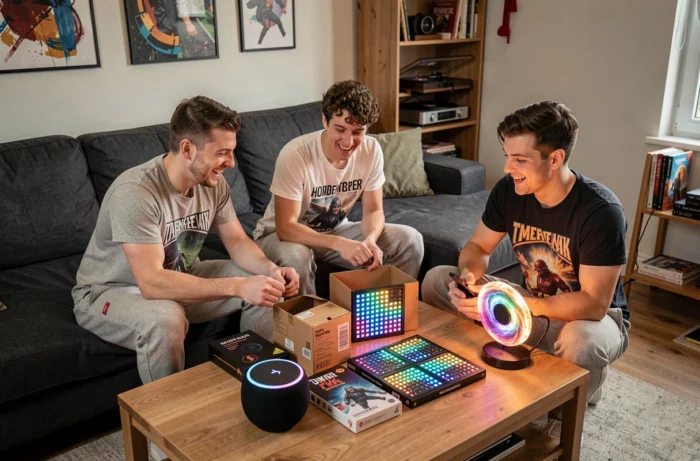
Geek Products and Second-Hand: An Under-Exploited Avenue
Refurbished retro consoles, second-hand boxed figurines, downgraded office accessories: the second-hand market offers significantly lower prices for products often in good condition.
The available data does not allow for a conclusion on the exact share of the geek market that goes through second-hand. However, the trend is visible: specialized resale groups are multiplying, and physical geek culture shops are increasingly incorporating a second-hand section.
A well-inspected second-hand geek product protects the wallet without sacrificing enjoyment. The condition remains to verify the authenticity of the item and the actual state of the packaging for collectible pieces.
The geek product market in 2026 is structured around two poles. On one side, discreet and functional tech that integrates into daily life. On the other, collectible and decorative items whose quality heavily depends on the manufacturer and distribution channel.
European regulation is beginning to filter out the least reliable connected products, which should gradually clean up the offering. It remains for each buyer to distinguish the item that will find its place on the desk from the one that will gather dust after a week.