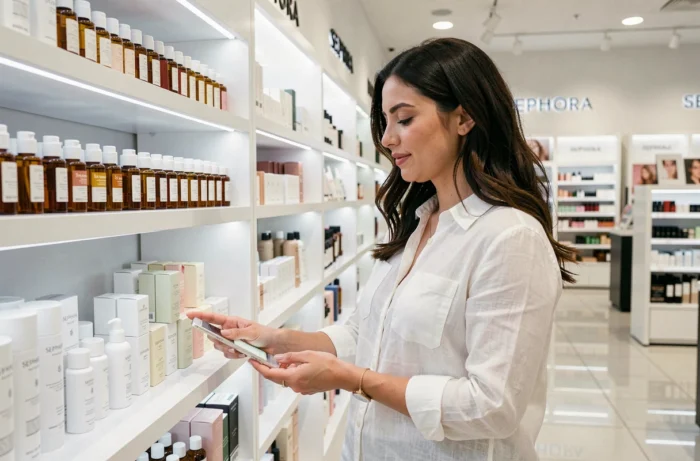
Typology is not listed in the Sephora catalog. The Parisian skincare brand founded by Ning Li in 2019 has built its model around direct online sales, bypassing traditional cosmetic distribution networks. This absence from the shelves of such a frequented store regularly raises questions among consumers who would like to test the products before purchasing.
Direct distribution model: what Typology gains from it
Typology sells exclusively through its own e-commerce site. This choice is not a lack of means; it is a strategy for margin and control. By eliminating intermediaries (distributors, multi-brand stores), the brand retains its entire profit margin, allowing it to offer lower prices than equivalent brands sold at Sephora.
This closed circuit also provides direct access to customer data. Typology can adjust its launches, formulations, and communications based on feedback collected on its platform, without relying on sell-out reports from a third-party distributor.
The downside of this approach is clear: there are no physical points of sale to test textures or scents. To compensate, the brand relies on an online skin diagnosis and sample formats. Consumers looking for where to find Typology at Sephora are therefore faced with a deliberate choice by the brand, not a commercial oversight.
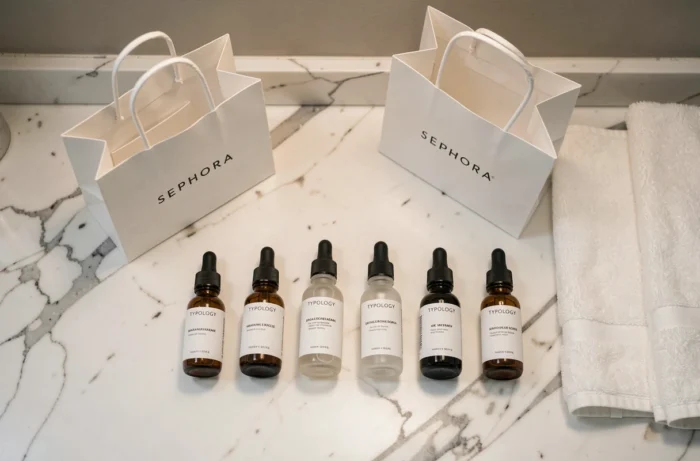
Typology and Sephora: two visions of the cosmetic market
Sephora operates as a brand aggregator. The store references several hundred labels, from luxury to mass market, and takes a commission on each sale. For a brand, entering Sephora means accepting strict pricing conditions, shared visibility with direct competitors, and often imposed promotional operations.
Typology has built its positioning on values of ingredient transparency and minimalist formulations. Integrating into a network like Sephora would require adapting its packaging, negotiating shelf placements, and participating in commercial highlights (sales, gift sets) that do not necessarily align with its editorial line.
In contrast, other brands with a similar “clean beauty” positioning have made the opposite choice. Some have accepted selective distribution at Sephora to gain visibility among an audience that would never have discovered them online. Typology’s refusal is therefore not an industry standard; it is a gamble.
European regulation 2026 and pressure on online brands
The regulatory context of 2026 adds a layer of complexity for brands that sell directly. Since July 30, 2026, the new reference list of cosmetic ingredient names from the EU (resulting from the Commission Implementing Decision (EU) 2025/1175) has become the only legally valid basis for INCI labeling. Brands that communicate about the composition of their products, as Typology systematically does, must verify the compliance of each product sheet.
At the same time, the expanded declaration of fragrance allergens came into effect on July 31, 2026, in accordance with Regulation (EU) 2023/1545. For a brand that emphasizes the skin tolerance of its formulas, this tightening imposes increased vigilance regarding the potential reformulation of certain serums and face creams.
Impact of the PPWR on packaging
The European regulation PPWR (Packaging and Packaging Waste Regulation), fully applicable since August 12, 2026, strengthens requirements on cosmetic packaging. Typology, which already uses glass bottles and streamlined packaging, is not necessarily the most exposed. The constraints particularly focus on:
- The effective recyclability of containers, beyond the simple mention “recyclable” on the label
- The reduction of secondary packaging (boxes, overwrapping) that must be justified by a real protective function
- The obligations for traceability of packaging materials throughout the supply chain
These requirements weigh more heavily on direct-selling brands, which manage shipping themselves and cannot share compliance costs with a distributor.
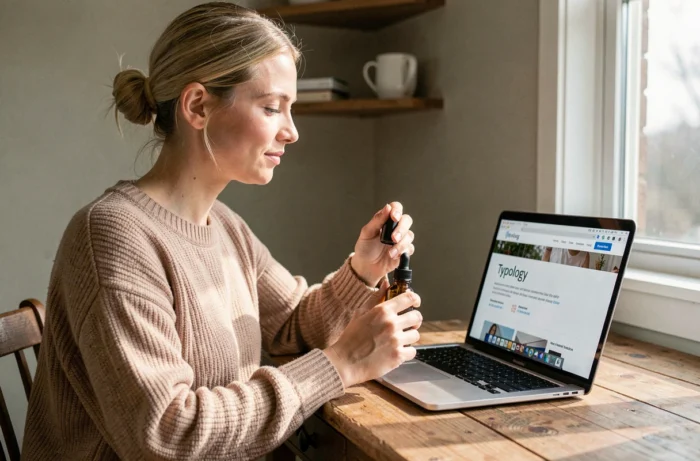
Where to buy Typology: the real channels in 2026
The question often arises, and the answer remains simple. Typology is available through a single channel:
- The official site typology.com, which offers the complete range (serums, creams, cleansers, hair care), the online skin diagnosis, and delivery in mainland France
- No third-party marketplace (Amazon, Nocibé, Marionnaud) officially distributes the brand
- Any Typology products found on resale sites do not benefit from any brand guarantee regarding preservation or authenticity
Purchasing on the official site remains the only option that guarantees the freshness of the formulas and access to the brand’s customer service. This model limits the risks of counterfeiting, a growing problem in the online cosmetics sector.
The online diagnosis as a substitute for in-store advice
Typology compensates for the absence of points of sale with a diagnostic questionnaire that directs consumers to products suitable for their skin type. This system replaces, to some extent, the advice of a Sephora salesperson. Field feedback varies on this point: some users find the recommendations relevant, while others regret the inability to compare textures before ordering.
The brand also offers discovery formats at reduced prices, allowing customers to test several references before committing to standard sizes. This remote trial mechanism is central to the conversion strategy of a brand without a physical storefront.
Typology has chosen a closed circuit that gives it total control over its prices, image, and customer data. This model, consistent with its values of transparency and minimalism, involves a compromise: the consumer must accept to purchase without having touched the product. As long as the brand maintains this line, its presence at Sephora or any other physical store remains unlikely.