Pablo Emilio Escobar Gaviria, born on December 1, 1949, in Rionegro, Colombia, and died on December 2, 1993, remains one of the most documented drug traffickers of the 20th century. His life intertwines a meteoric criminal rise, colossal wealth, and a family sphere that long remained in the shadow of the Medellín cartel.
Escobar’s Hippos: An Ecological Legacy Turned National Crisis
Before even discussing the man, a detail of his private life continues to produce concrete effects in Colombia: his hippos. Escobar imported these animals to his private estate, Hacienda Nápoles. After his death, they were left behind.
The hippos have reproduced in the Magdalena Medio region to the point of being classified as an invasive species. They pose documented risks to local biodiversity and to nearby populations. Since 2023, the debate over their management has intensified in Colombia, oscillating between sterilization, relocation, and culling.
This unintentional legacy illustrates how Escobar’s excesses were not limited to cocaine trafficking. To find more information about Pablo Escobar, his physical stature and family background also shed light on the character.
Pablo Escobar’s Height and Weight: What Verifiable Sources Say
Pablo Escobar’s height is established at 1.67 m according to biographical records compiled from official documents. This modest stature contrasts with the imposing image that popular culture attributes to him.
His weight fluctuated over the decades, particularly during his years in hiding. Photographs taken by the Colombian police during his arrest in Medellín in 1976 show a rather thin man, far from the bulkier physique he is known for in the 1980s, a period when his wealth and sedentary lifestyle had altered his body shape.
No official Colombian source provides a precise and reliable weight. The estimates circulating online are rarely sourced. Only the height of 1.67 m is credibly documented.
Escobar’s Family: María Isabel Santos and the Children
Pablo Escobar was married to María Isabel Santos (born Victoria Eugenia Henao). Their union produced two children, including Juan Pablo Escobar, who has since changed his name to Sebastián Marroquín. The latter published a testimony translated into French titled “Pablo Escobar, My Father,” offering an insider’s view of the domestic life of the Medellín cartel leader.
Escobar’s family lived in extreme luxury. In the mid-1980s, Escobar owned 19 different residences in Medellín alone, each equipped with a helipad. The money generated by trafficking was so abundant that he struggled to find ways to invest it: millions of dollars were buried.
The Family’s Fate After 1993
After Escobar’s death, his family left Colombia and lived under false identities in several countries. Argentina became their main refuge. María Isabel Santos and her children had to deal with a burdensome family legacy, navigating legal proceedings and attempts at rebuilding.
Sebastián Marroquín chose a public path, giving numerous talks and publications to deconstruct the myth of his father. His book portrays a man capable of familial tenderness while ordering mass murders.
Medellín After Escobar: From Narco-Tourism to Community Memory
The city of Medellín has long been associated solely with Escobar’s name. Tourist circuits offered visits to his former properties, the luxury prison La Catedral, or the Monaco building. This approach is changing.
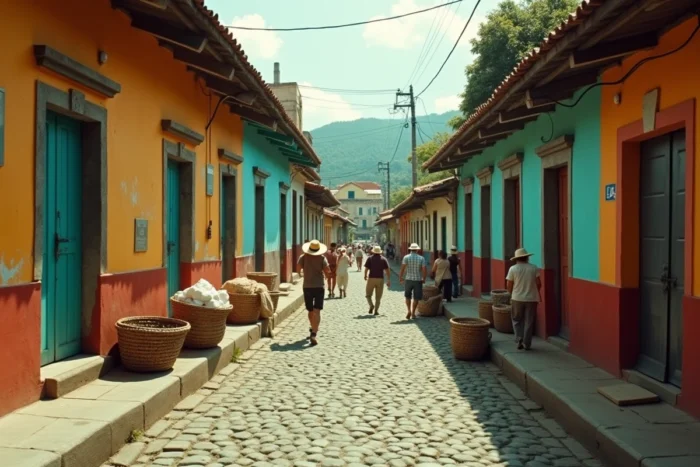
Recent tourist offerings now emphasize the comunas, such as Comuna 13, presented as symbols of Medellín’s urban transformation. Graffiti, cable cars, and the cultural work of residents are gradually replacing the narrative centered on drug traffickers.
This paradigm shift does not aim to erase history but to place it in a broader context:
- Visits incorporate the memory of violence while highlighting the resilience of working-class neighborhoods
- Local foundations have developed dozens of tourist experiences blending culture, urban art, and social history
- The narrative of “narco-tourism” is increasingly unsettling for Medellín residents, who refuse to let their city be reduced to a single man
This evolution reflects a shift in the collective narrative: Medellín is no longer Escobar’s city, but that of the communities that survived his reign.
Escobar’s Death: The Circumstances of December 2, 1993
Pablo Escobar was spotted by a joint task force between the United States and Colombia. An agent, driving in a truck, saw him talking on the phone near a window on the second floor of a house. The agent was precisely tracking the phone call that Escobar was making.
The police burst in through the front door, eliminating his bodyguards. Escobar attempted to flee by climbing onto the roof. A police captain shot him. He was 44 years old, dying a day after his birthday.
The location by phone triangulation, combined with physical surveillance, ended months of pursuit. This operation remains a case study in anti-narcotics cooperation.
Pablo Escobar’s full birth name, Pablo Emilio Escobar Gaviria, rarely appears in fictional representations dedicated to him. Series and films have shaped an image sometimes distant from documented facts, making it all the more useful to return to biographical sources and direct testimonies from his family.